
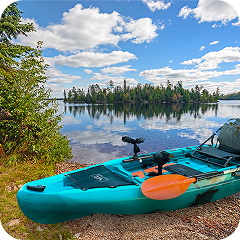

You've watched the water temperature drop into the low 50s, then the high 40s. The bass have slowed to a crawl, and most recreational boaters have winterized their rigs. But if you know where to look, late fall on a reservoir might just be the best walleye fishing of the entire year.
The challenge? Walleye scatter across massive reservoirs as they follow baitfish into deeper water, and the bite windows shrink as metabolism slows. Success requires understanding seasonal migration patterns, reading your electronics like a pro, and adapting your presentation to cold-water conditions. Whether you're trolling breaklines at dawn or jigging deep points after dark, a kayak gives you the stealth and positioning control that big boats can't match—especially when walleye are holding tight to specific structure.
Here's how to consistently catch walleye on late-fall reservoirs when most anglers have already hung up their rods.
Understanding Late-Fall Walleye Behavior
As water temperatures drop below 55°F, walleye undergo a significant behavioral shift. They're preparing for winter, focused almost exclusively on feeding to build energy reserves. The good news: when you find them, they're often willing to eat. The bad news: "finding them" becomes the primary challenge.
Late-fall walleye suspend less than they do in summer. They relate more tightly to bottom structure, particularly areas where depth changes create ambush opportunities. They're following shad, perch, and other baitfish that congregate in predictable late-season patterns. In most reservoirs, this means main-lake structure—channel breaks, long tapering points, submerged humps, and the transition zones where creek arms meet the main body.
Water clarity often improves in fall as algae dies back and boat traffic decreases. This can push prime feeding times toward low-light periods and after dark. Don't be surprised if your best action comes in the final hour before sunset or during the first two hours of darkness. Walleye feel more comfortable moving shallow to feed when light levels drop.
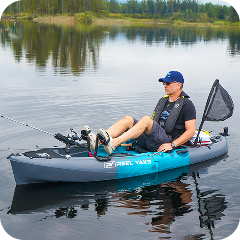
Wind also becomes your ally. A sustained blow that stacks baitfish against windward banks or points will concentrate walleye. While fishing from a pedal kayak in 15-mph wind isn't always pleasant, it often produces the day's best bite because you can hold position hands-free while working your presentation.
Channel Breaks: The Highway System
If you fish only one late-fall structure type, make it channel breaks. These are the edges where the old river channel drops off into deeper water—the highways walleye use to move between feeding areas.
Most productive channel breaks have specific characteristics. Look for areas where the break runs close to secondary structure like points or humps. The best spots often occur where the channel makes a bend or where the slope changes from gradual to steep. These irregularities create current breaks and ambush points that concentrate both baitfish and predators.
Depth ranges vary by reservoir, but in most systems, focus on breaks in 18-35 feet of water during daylight. The walleye often suspend just off the break on the deeper side, periodically moving up onto the shelf to feed. After dark, they'll frequently move shallower, sometimes up into 10-15 feet.
Use your electronics to mark the depth where baitfish are holding. Walleye will typically position just below the bait layer. When you see suspended marks at 22 feet with the bottom at 32, that's where you want your presentation. A quality fish finder makes all the difference here—you're not just looking for fish, you're reading the three-dimensional structure and the baitfish relationship.
From a kayak, you can drift channel breaks more effectively than most boats. Position upwind or up-current, then drift parallel to the break while jigging or dragging live bait. The slow, quiet drift keeps you in the zone longer without spooking fish in clear water.
Points: The Intersection of Everything
Long, tapering points that extend from the shoreline into the main lake are walleye magnets in late fall. The best points share common features: they taper gradually rather than dropping off abruptly, they have a defined deep-water end typically in 25-40 feet, and they intersect with the main channel or deep water on at least one side.
Points with secondary features—a hump on top, scattered rock, a small saddle connecting to another point—are even better. These irregularities give walleye specific positioning spots rather than forcing them to roam the entire structure.
Fish points systematically. Start deep at the tip and work your way shallow, or vice versa. Make multiple passes at different depths until you establish a pattern. On any given day, walleye might be on the tip in 30 feet, halfway up in 20 feet, or even on the shallow flat in 12 feet if conditions are right (cloudy, windy, low light).
The sides of points often produce better than the top. Walleye use the slope to corral baitfish, and they feel more comfortable with deep water nearby for a quick escape. Pay special attention to the steeper side if the point has one—this is often where the biggest fish hold.
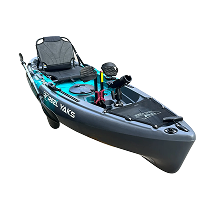
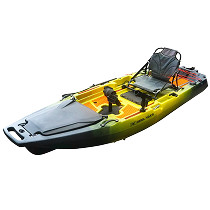
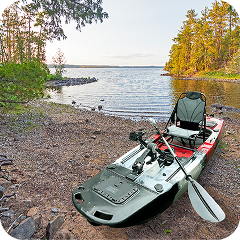
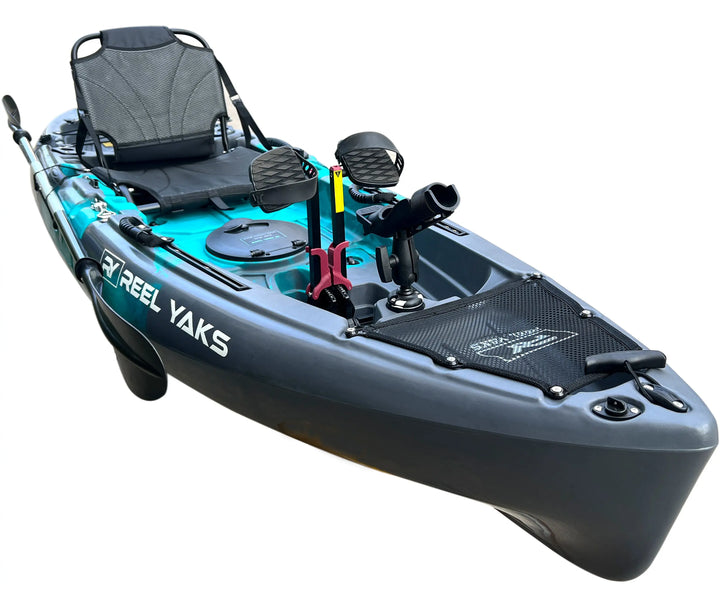
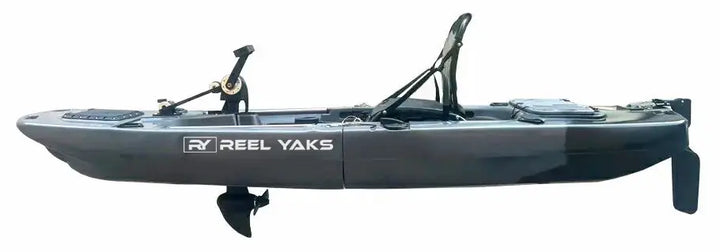
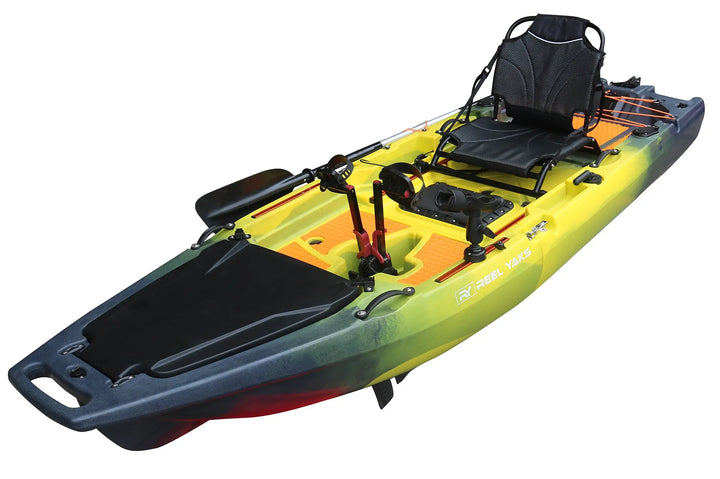
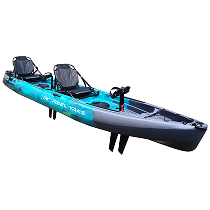
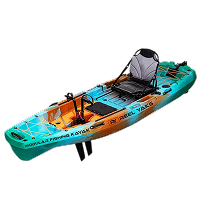
A pedal kayak shines on points because you can make precise, controlled drifts along the contours while keeping your hands free to fish. The Radar and Recon models offer excellent stability for the stand-up presentations that help you cover water faster and see structure more clearly in shallow areas.
Trolling vs Jigging: Choosing Your Approach
The trolling-versus-jigging debate often comes down to fish location and activity level. Both work in late fall, but they solve different problems.
Trolling excels when you're searching for active fish scattered along extensive structure. Crankbaits in crawfish, shad, and perch patterns running at 12-20 feet will contact walleye throughout their depth range. In a kayak, you can troll effectively with two rods—one deeper, one shallower—to cover the water column. A prop drive pedal system makes trolling easier because you can adjust speed precisely and even go in reverse to work through productive areas multiple times.
Speeds in the 1.5-2.5 mph range generally work best in cold water. You're slower than summer trolling speeds because walleye metabolism has slowed. They won't chase down a bait screaming past at 3 mph, but they will intercept something moving steadily at their level.
Jigging becomes the better choice once you've located fish or when you're working high-percentage specific spots. A 3/8-ounce to 5/8-ounce jig tipped with a minnow, piece of crawler, or soft plastic remains deadly on late-fall walleye. Colors matter less than you'd think—white, chartreuse, and natural colors all work—but size matters a lot. Downsize to 2-3 inch plastics in cold water.
The presentation is simple: cast beyond your target area, let the jig fall on controlled slack line (most bites come on the drop), then hop it back slowly with long pauses. In 40-degree water, a five-second pause isn't too long. You're triggering a reaction bite from fish that are lethargic but still willing to eat an easy meal.
Jigging vertical from a drifting or anchored kayak works exceptionally well on channel breaks and points. You're staying in the strike zone continuously rather than passing through it. This efficiency often outproduces trolling once fish are located. The hands-free pedaling of a quality fishing kayak lets you maintain position or drift slowly while working your rod with full attention.
After-Dark Headlamp Setup and Safety
Some of the year's best walleye fishing happens after sunset, particularly in late fall when water clarity is high. But fishing from a kayak in the dark requires proper preparation, both for success and safety.
Your headlamp setup is critical. You need two light sources: a headlamp for close work (tying knots, netting fish, checking gear) and navigation lights for visibility to other boats. Choose a headlamp with red and white modes. Use red when working on deck—it preserves your night vision and doesn't spook walleye in shallow water. Switch to white only when you need maximum visibility for tasks like removing a hook or checking electronics.
For navigation, you're legally required to show a white light visible 360 degrees. A simple white LED on a pole mounted at your highest point satisfies Coast Guard requirements. Some anglers add a small red/green bow light, though it's not required for paddle craft under some state regulations. Check your local requirements.
Keep your headlamp on its dimmest setting when fishing. Walleye have excellent low-light vision, and blasting a bright white light across the water will shut down the bite in shallow areas. One Reel Yaks owner who fishes Lake Erie at night mentions he catches significantly more fish when he disciplines himself to use minimal light, even though it's less convenient.
Have a backup light source—always. A small waterproof flashlight in your PFD pocket can be a trip-saver if your primary headlamp fails. Your phone works in a pinch, but cold temperatures drain batteries fast, and you don't want to sacrifice your communication device.
Pre-rig everything before dark. Tie on your jigs, set up your trolling rods, organize your tackle within easy reach. Once the sun sets, you should be fishing, not fumbling with knots you can't see. This is where those extra minutes of preparation pay massive dividends.
Stay closer to launch than you think necessary, especially on unfamiliar water. Familiar daytime landmarks disappear at night, and navigation becomes exponentially harder. Use your fish finder's GPS to mark your launch ramp and any hazards you pass. The return trip always takes longer than you expect when you're relying on a headlamp and GPS screen.
Essential Late-Fall Walleye Gear
Cold-water kayak fishing demands gear you might skip in summer. A quality dry suit or heavy-duty rain gear over insulating layers isn't optional—immersion in 45-degree water is immediately dangerous. Even if you never capsize, spray and splashing will soak inadequate clothing within an hour.
Your rod selection matters more in cold water than warm. Walleye bites are often subtle—a slight weight change or gentle tap. A medium-light fast-action rod in the 6'6"-7' range telegraphs those light bites while providing enough backbone to set hooks and control fish. Pair it with a quality spinning reel spooled with 10-pound braid to 8-pound fluorocarbon leader. The no-stretch braid transmits feel, while the fluorocarbon leader provides stealth in clear water.
Electronics become even more valuable in fall. You're searching for fish rather than fishing known concentrations. A fish finder with side imaging helps you identify structure and locate bait schools without passing directly over them. Down imaging shows you exactly where fish are positioned on structure. Standard sonar works fine, but the imaging technologies significantly shorten your learning curve.
A good net with a long handle saves more fish than any other accessory. Walleye thrash hard at the kayak, and trying to lip-land them while seated in a low-profile boat leads to lost fish. A 20-inch hoop is sufficient; anything larger becomes awkward in a kayak cockpit.
Putting It All Together
A productive late-fall walleye day typically follows this pattern: arrive at the ramp an hour before sunset. Launch and head directly to your primary point or channel break—you've already identified this during pre-trip map study. Make a few trolling passes to check for active fish and baitfish concentrations.
If trolling produces, continue it until the bite slows. If not, switch to jigging on specific depth contours where your electronics show promise. As sunset approaches, focus on shallower areas of your structure—the tops of points, the shallow edge of channel breaks, anywhere in the 12-18 foot range where walleye feel comfortable feeding in low light.
After dark, slow down everything. Your jigging cadence, your trolling speed, your movements in the kayak. Fish are feeding but not aggressively chasing. They want an easy meal that appears vulnerable. Work the same areas you fished at sunset, but don't be afraid to go shallower. Walleye that were at 22 feet an hour ago might be at 14 feet now.
Pay attention to every detail. If you catch a fish at 19 feet on the south side of a point, fish that exact scenario again. Late-fall walleye school tightly and relate to very specific conditions. Finding one often means finding several—if you can replicate the presentation and location.
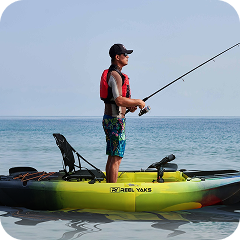
The kayak advantage in all of this? You can access areas big boats avoid—shallow cuts between points, inside turns on channel breaks, back ends of creeks where the channel narrows. You drift more naturally and quietly. You can anchor quickly on precise spots. And when you do hook a walleye in cold, clear water from a stable pedal kayak, you can fight it standing up with better leverage and control than you'd have from a traditional sit-inside boat.
Late-fall reservoir walleye fishing isn't about secrets or complicated techniques. It's about understanding where fish position as they prepare for winter, putting in your time on high-percentage structure, and staying flexible enough to adapt to changing conditions. The anglers who succeed are the ones still on the water when temperatures drop and the crowds thin.
That's when the best fishing of the year happens—and when a well-equipped fishing kayak proves its worth.
Fish More. Haul Less. No Roof Rack Required.
Reel Yaks modular pedal fishing kayaks break into 2–3 compact sections that fit in your car boot, store in your apartment, and assemble in 5 minutes — no roof rack, no garage, no heavy lifting. Browse all Reel Yaks modular fishing kayaks →