
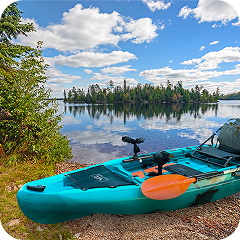

You've drawn a lake you've never fished. Tournament launch is Saturday at 6 AM. You have exactly four hours on Friday afternoon to figure out where the fish are, what they're eating, and how you're going to put together a five-bass limit that places you on the podium. No time for systematic coverage. No luxury of multi-day reconnaissance. Just you, your kayak, and a ticking clock.
Welcome to the reality of kayak tournament fishing. While boat anglers might idle around studying electronics for hours, kayak anglers need a different approach—one that maximizes mobility, leverages our shallow-water access, and turns limited pre-fish time into actionable intelligence. Here's the proven 4-hour tournament prefish system that consistently puts kayak anglers in the money.
Hour One: Intelligence Gathering Before You Launch (60 Minutes)
The biggest mistake anglers make is rushing to the water. Your first hour happens before your kayak touches the lake, and it's arguably your most important. Start with digital map study using Navionics, Google Earth, or your fishfinder's mapping software if it covers your tournament water.
Look for three distinct zones that offer different patterns. You're searching for a deep zone (main lake points, channel edges, offshore structure), a transitional zone (secondary points, creek channel intersections, staging areas), and a shallow zone (backs of pockets, flats, vegetation). The key is variety—if your primary pattern dies during the tournament, you need backup plans in completely different water types.
Mark potential waypoints digitally before you arrive. I typically identify 8-12 high-probability spots across my three zones. On most tournament lakes, you'll spot the obvious stuff: a main lake point with a 6-foot flat transitioning to 15 feet, a creek channel swing with laydowns, a grass line in the back of a major pocket. But zoom in closer. Look for the irregularities—a small secondary point 50 yards before the main point, a hard bottom transition you can identify by color change in satellite imagery, a pocket within a pocket that might hold cleaner water.
While you're still at home or in the truck, check recent tournament results if they're public. What weights won? That tells you whether you're looking for a grinder pattern (lots of small fish, need 25-30 casts per spot) or a kicker pattern (a few big bites will do it). Check local fishing reports, even shore fishing comments on Google reviews of the lake. When someone mentions "caught bass near the dam" two weeks ago, that's data.
This pre-launch hour should also include rigging. Don't waste on-water time tying knots. I set up six rods for pre-fishing: a moving bait (squarebill or chatterbait), a Texas rig, a Ned rig, a swimbait, a topwater, and a jig. These cover fast exploration and finesse follow-up. Each rod gets checked, each drag set, each hook sharpened.
Hour Two: Deep Zone Reconnaissance (60 Minutes on Water)
Now you launch, and your clock starts for real. Head directly to your deep zone. In most tournaments, kayak anglers ignore offshore because it requires more work than bank-beating shallow water. That's exactly why you should look there first during pre-fish.
Your deep zone goal isn't to catch fish—it's to confirm or eliminate this pattern. Pedal to your first main lake point or channel ledge. Make 15-20 casts with your moving bait and your Texas rig. You're covering water fast, looking for activity. If you get bit in the first 10 minutes, slow down. Work the area methodically. Drop waypoints at every bite, even short strikes.
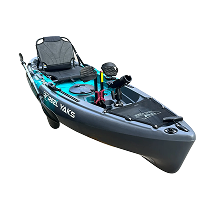
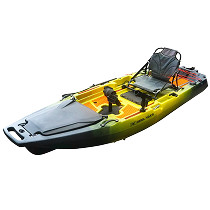
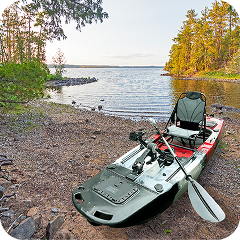
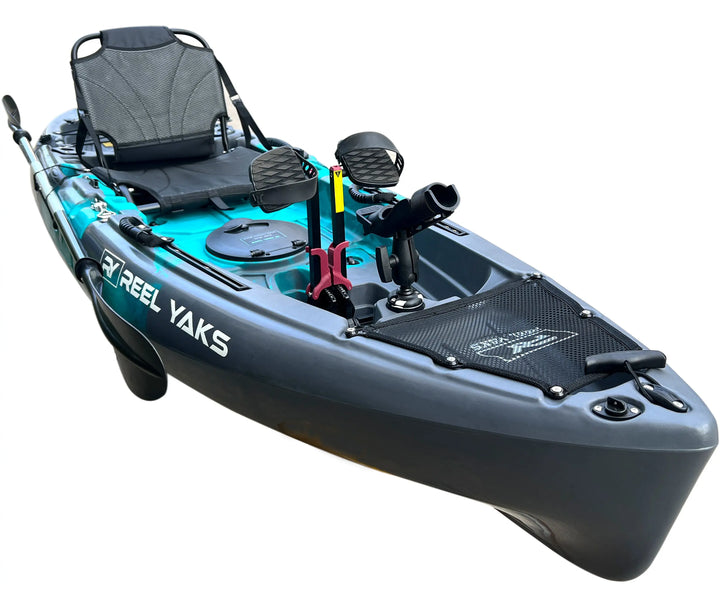
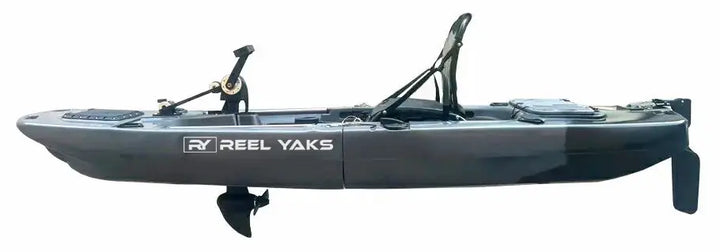
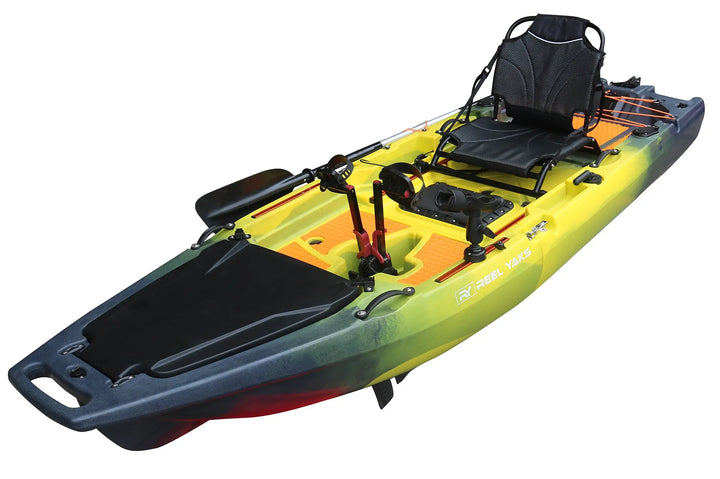
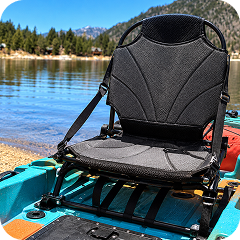
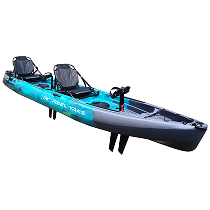
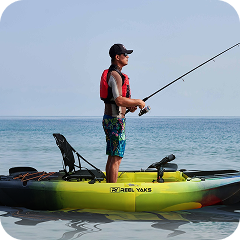
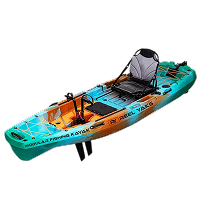
The modular design of Reel Yaks kayaks gives you a huge advantage here. Models like the Radar or Recon let you stand for better casting angles to offshore structure, while the fin drive keeps you quiet—critical when fish are suspended or finicky on deeper structure. Traditional kayaks force you to sit, limiting your casting radius and making it harder to work a full 360 degrees around structure.
Pay attention to bait. If you're marking baitfish schools on your electronics at 12 feet but getting no reaction from bass, note it and move. If you see isolated bass on structure but they won't eat, mark it—they might feed during the tournament's different timing. If you get one solid bite, spend 20 minutes there. One fish tells you more than marking ten spots with no contact.
Hit 3-4 deep spots maximum in this hour. Speed matters, but so does thoroughness. A common mistake is making six casts at eight spots rather than thirty casts at three spots. Six casts tells you almost nothing. Thirty casts with different retrieves, depths, and lure styles tells you whether fish are present and feeding.
As your second hour closes, you should know: Is the deep bite viable? If you caught fish or had multiple follows/short strikes, it's in play. If you had zero activity despite good-looking structure, it's probably an elimination—save it as a desperation backup but don't count on it tournament day.
Hour Three: Transitional and Shallow Sampling (60 Minutes)
Hour three is about finding the pattern that'll build your limit. Pedal to your transitional zone—those secondary points, creek intersections, and staging areas between deep and shallow. This is often where kayak tournament anglers do their damage because we can position precisely in current or wind without anchor noise.
Work through your transitional spots faster than the deep zone. You're looking for active fish here. Transitional bass are usually feeding, not sulking. Hit each spot with 10-15 casts using reaction baits first—crankbait down a channel swing, chatterbait across a secondary point, swimbait parallel to a drop. If you get bit, great. If not, don't linger. These fish are typically "yes" or "no" rather than needing finesse convincing.
After hitting 2-3 transitional areas, push shallow. Target your isolated pockets, grass lines, or laydown clusters. Shallow water is where kayaks dominate—we access stuff boat traffic ignores, and our quiet approach (especially with fin drive) doesn't blow out the zone before you make your first cast.
In shallow water, speed up even more. You can hit 4-5 shallow spots in 25 minutes if you're efficient. Topwater, squarebill, or a Texas-rigged creature—make a dozen casts per spot. Shallow fish show themselves quickly. Either you get blowups and bites, or the water's dead. There's rarely an in-between in tournament pre-fish conditions.
Document everything. I use my phone to drop a pin in Google Maps at every bite, then voice-record a note: "Secondary point, south side, 4 feet, bit a white chatterbait on third cast, 1.5 pounder." During the tournament when you're amped up and running on adrenaline, you won't remember which pocket gave you the bite. The waypoint will.
By the end of hour three, you should have sampled all three zone types. You're looking for the pattern that gave you the most bites or the best quality. Maybe you got six bites in shallow grass. Maybe you had one 3-pounder on a deep ledge and nothing else. Maybe transitional points gave you consistent 1.5-pound fish. This data shapes your hour four.
Hour Four: Pattern Refinement and Backup Planning (60 Minutes)
Your final hour is not about finding new water—it's about refining what worked and establishing your backup. If shallow grass gave you the most bites in hour three, spend 40 minutes of hour four hitting similar grass in different pockets. You're confirming it's a pattern, not a fluke.
This is when you test the details that'll matter tournament day. If you caught fish on a white chatterbait, try a green pumpkin. Same bites? Then color doesn't matter, and you can fish confidently. If bites stop, white matters, and you'd better have four white chatterbaits rigged Saturday. Test retrieval speed. Test cadence. If you caught fish cranking a squarebill into laydowns, try slow-rolling it. Try burning it. The fish will tell you what they want.
Also test positioning. Kayak anglers have a huge advantage here because we can pedal into precise positions that reveal casting angles boat anglers can't access. If you caught a fish casting parallel to a grass line, try perpendicular. Try casting from deeper water toward the shallows versus sitting shallow and casting out. Small positioning changes often double your catch rate.
Use the last 20 minutes to establish your tournament day route. Where will you start? If you're fishing shallow pockets and everyone launches into the same creek, maybe you start opposite to avoid traffic. If your best spot is offshore and likely unpressured, you might burn straight there at launch. Pedal the route if possible. Time it. If it takes 15 minutes to reach your starting spot, you need to account for that in your tournament day timeline.
Also identify your pivot plan. If your primary pattern fails by 9 AM tournament day, what's your audible? Maybe it's switching from shallow to that deep ledge that gave you one good bite. Maybe it's abandoning reaction baits for Ned rigs if a cold front moves through overnight. Having a predetermined backup prevents you from panic-fishing six different patterns and catching nothing.
Equipment Considerations for Efficient Pre-Fishing
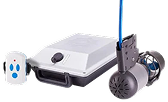
Your kayak setup directly impacts how much water you can cover in four hours. Models in the 10-11 foot range like the Reel Yaks Radar or Recon offer the best balance—long enough to pedal efficiently between spots, short enough to maneuver into tight pockets without burning time on navigation. The Recon's transducer mount becomes critical during pre-fish because you're scanning new structure quickly, and quality electronics save you from blind casting unproductive water.
Drive system matters more in pre-fish than tournament day. A fin drive keeps you quiet for sampling skittish fish, but it won't reverse, which costs you time repositioning. A prop drive lets you pivot and reposition instantly, which matters when you're hitting 12 spots in three hours. Many anglers actually prefer prop drives for pre-fishing efficiency even if they tournament fish with fin drives. The Reel Yaks modular system lets you swap drives between boats in your garage if you own multiple setups.
Don't overload your kayak with gear during pre-fish. You need rods, a tackle box with key lures, water, and snacks. That's it. Extra weight slows you down, and you're not trying to fish an eight-hour day—you're gathering intelligence. The 430-pound capacity on the Radar or Recon gives you plenty of room for essentials without the temptation to bring your entire garage.
Weather and Water Conditions Reality Check
Here's the hard truth: conditions during your Friday pre-fish will differ from Saturday's tournament. Wind direction changes. A nighttime cold front drops water temperature. Barometric pressure swings. You can't fish Friday's exact conditions on Saturday.
What you can do is identify structure that should hold fish regardless of minor weather changes. A secondary point with a defined depth change will hold bass whether it's sunny or cloudy. A grass bed with irregular edges will concentrate fish even if wind direction shifts. Focus your pre-fish on finding structure-oriented patterns rather than conditions-dependent patterns when possible.
That said, if Friday is sunny and calm and Saturday's forecast shows wind and clouds, factor that in. Shallow fish might push deeper or tighter to cover. Topwater might not work in chop. Use your last-hour backup planning to address this. Maybe you found fish on a flat in 3 feet on Friday, but you also marked the adjacent channel ledge in 8 feet—that's your wind day backup.
Post Pre-Fish: Organizing Your Intel
When you load your kayak after hour four, your work isn't done. Spend 20 minutes that evening organizing your data. I create a simple note in my phone with three sections: Primary Pattern, Secondary Pattern, Desperation Pattern.
Primary Pattern might read: "Shallow grass pockets, north end, 2-4 feet, white chatterbait, 6 bites, biggest 2 lbs." Secondary Pattern: "Transitional points, creek channel intersections, 6-8 feet, Texas-rigged creature, 3 bites, biggest 2.5 lbs." Desperation: "Main lake ledges, 12-15 feet, Carolina rig, 1 bite but it was 3 lbs."
This organization does two things. First, it gives you confidence. You're not guessing Saturday morning—you have a plan based on actual fish contact. Second, it prevents you from overthinking. Tournament morning anxiety makes anglers abandon what worked in pre-fish to chase phantoms. Your notes keep you honest.
Also prep your tournament day rods Friday night based on what worked. If the white chatterbait was money, rig two rods with it—different retrieve speeds or as a backup if you break one off. If the Texas rig was your secondary, have that ready. Don't rig six different techniques because you might need them. Rig what you know works, plus one audible rod.
The Four-Hour Pre-Fish Advantage
Four hours seems limiting, but it's actually liberating. You can't learn the whole lake, so you don't try. You focus on finding one repeatable pattern that'll produce five keeper bass. That's all you need for most kayak tournaments.
The anglers who struggle are the ones who try to do too much—hit 20 spots, try 15 lure types, cover the entire lake. They end tournament day with surface-level knowledge of everywhere and deep knowledge of nowhere. The four-hour system forces you to commit, to dig into a pattern, and to show up Saturday with confidence rather than confusion.
One final note: sometimes four-hour pre-fish produces zero bites. It happens. Bad timing, tough conditions, or just off-day fish. Don't panic. Your structure waypoints are still valid. Your lure selection based on conditions and season is still sound. Show up tournament day and fish with confidence anyway. Pre-fish gives you a head start, but tournaments are won by anglers who adapt when their practice doesn't translate. The four-hour system gives you enough information to start strong and enough flexibility to pivot when necessary.
Now get out there and make those four hours count. The podium is waiting.
Fish More. Haul Less. No Roof Rack Required.
Reel Yaks modular pedal fishing kayaks break into 2–3 compact sections that fit in your car boot, store in your apartment, and assemble in 5 minutes — no roof rack, no garage, no heavy lifting. Browse all Reel Yaks modular fishing kayaks →