

You've been crushing it all October—topwater blowups at dawn, aggressive strikes on fast-moving baits, fish stacked on transition breaks. Then November arrives, and suddenly it feels like someone drained half the lake. Your go-to presentations get ignored. That lipless crankbait that was money last week now comes back untouched cast after cast. Welcome to the coldwater slow bite, the annual shift that humbles even seasoned anglers.
This isn't about fish disappearing. It's about understanding what happens when water temperatures drop below critical thresholds, how prey behavior changes the entire food chain, and why the techniques that worked in October suddenly fail in November. More importantly, it's about adapting your approach so you keep catching fish while others are putting their rods away for the season.
The 50-Degree Threshold: When Everything Changes
Water temperature drives fish metabolism more than any other single factor. Most gamefish species hit a biological gear shift when surface temps drop through the mid-50s into the upper 40s, typically happening across most of the northern U.S. and southern Canada during November.
Largemouth bass, for example, maintain aggressive feeding patterns down to about 55 degrees. Below that, their digestive systems slow dramatically—a meal that might be processed in 12 hours at 70 degrees could take 48 hours at 48 degrees. Fish don't stop feeding entirely, but they become extremely selective about energy expenditure. Chasing a fast-moving bait 15 feet burns more calories than they'll gain from eating it.
Smallmouth bass tolerate cold slightly better, often feeding actively into the low 50s, but they exhibit the same selectivity. Walleye handle cold water best among the popular sportfish, staying relatively active into the 40s, though their feeding windows narrow considerably. Northern pike slow down but remain opportunistic predators—they'll still crush an easy meal presented right in front of them.
The practical result: fish that would chase moving baits in October now want slow, subtle presentations delivered within a few feet of their position. The aggressive retrieves that triggered strikes last month now trigger nothing but exercise for your casting arm.
Baitfish Density and the Compression Effect
While predator metabolism is slowing, their prey is undergoing an even more dramatic shift. Shad, the primary forage in many fisheries, are extremely cold-sensitive. When water temps drop into the low 50s, shad schools compress into tighter areas, seeking the warmest available water—typically deeper sections with slight temperature advantages or areas near warm-water discharges.
This compression creates a paradox for anglers. On one hand, baitfish are more concentrated, which should make predators easier to locate. On the other hand, gamefish surrounded by densely packed real baitfish have little reason to strike an artificial. Why chase your crankbait when they're sitting in a cloud of thousands of dying or disoriented shad?
Threadfin shad, common in southern reservoirs, are particularly vulnerable. They start dying en masse when water temps hit 45 degrees, creating both an easy food source and a tough matching-the-hatch scenario. Your lure is competing with free, dying bait that requires zero energy to catch.
In northern lakes where perch, cisco, or shiners form the primary forage base, the dynamic differs slightly. These baitfish tolerate cold better but still reduce activity levels and school tighter. The predator-prey relationship shifts from chase-and-attack to ambush-and-intercept.
Depth Migration and Structure Changes
November brings vertical migration in most water bodies. Bass that were prowling 5-15 foot flats in October often drop to 20-35 foot ranges in November, positioning on deeper structure adjacent to their fall haunts. They're not abandoning their territory entirely—they're staging in nearby deeper water that offers more stable temperatures and proximity to concentrating baitfish.
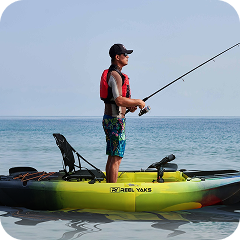
From a kayak fishing perspective, this depth change matters enormously. You're no longer covering shallow flats looking for active fish. You're targeting specific deeper structure—channel breaks, creek channel bends, deep ends of points, submerged humps in the 25-35 foot range. The fish are there, but they're not roaming. You need to put your bait directly in the strike zone.
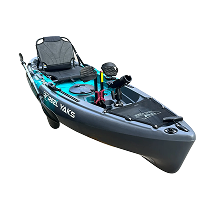
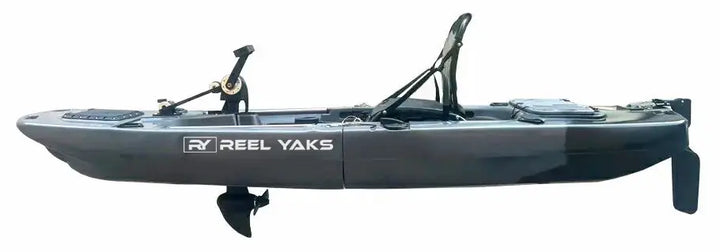
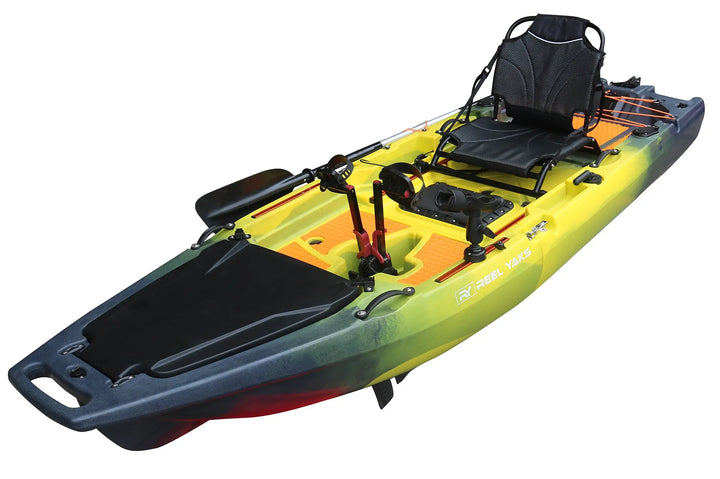
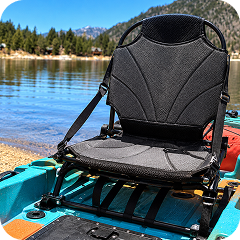
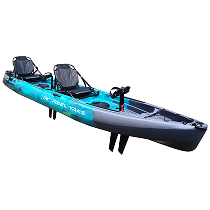
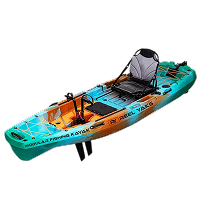
This is where a stable platform makes a real difference. Working vertical presentations in 25 feet of water from a tippy kayak is an exercise in frustration. You need stability to maintain position, especially if there's wind or current. The W-hull design on models like the Reel Yaks Radar and Recon provides the steadiness to fish vertically without constantly bracing and re-positioning, letting you focus on detecting the light bites that define cold-water fishing.
Presentation Speed: The Make-or-Break Factor
Here's where most anglers fail to adapt quickly enough. The same angler who's been ripping a chatterbait at moderate-fast retrieve all October will try slowing it down in November—but "slower" is still too fast. Cold water demands painful-crawling retrieves that feel unnatural.
A jig-and-plastic combo that you'd hop briskly along bottom in summer needs to be dragged, paused, barely lifted, paused again. We're talking 10-15 second pauses between movements. A suspending jerkbait that got twitched and paused for 3 seconds in October might need 20-30 second pauses in November. It feels wrong. You'll think you're doing nothing. But lethargic fish won't move far for a meal—they need time to inspect, decide, and slowly intercept.
Blade baits and spoons become more effective because you can fish them vertically with minimal movement—lift, drop, pause, repeat. The flutter on the fall triggers strikes from fish that won't chase. Same principle with drop-shotting: the bait stays in the zone, moving subtly, while the fish slowly approaches.
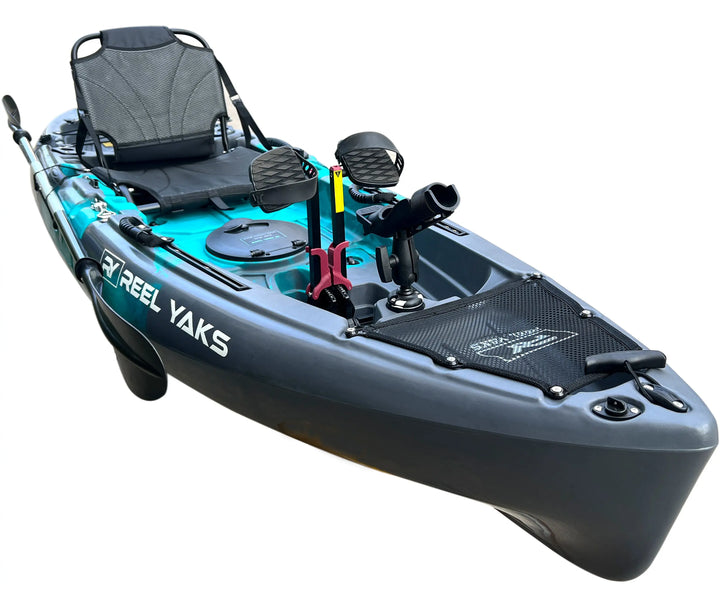
The kayak advantage here is boat control. In a bass boat, you're constantly dealing with drift and having to reposition. In a pedal kayak with a fin drive system, you can make micro-adjustments to stay directly over structure while working a vertical presentation. The quiet operation means you're not spooking fish in that critical 15-25 foot zone where sound really carries.
Color and Profile Adjustments
Water clarity often improves in November as algae dies back and lake turnover settles. Clearer water calls for more natural colors—translucents, whites, silvers that mimic dying shad. The chartreuse and bright colors that worked in stained October water can look garish in gin-clear November conditions.
Profile matters more than many anglers realize. Big shad imitations work better than small ones because lethargic fish are looking for maximum calories per effort. A 4-inch swimbait outproduces a 3-inch version because it represents a more worthwhile meal. Similarly, a 3/4-ounce jig gets more attention than a 3/8-ounce—the bigger profile is more visible and seems more worth the effort of intercepting.
That said, finesse still has its place, particularly for pressured fish or extreme cold. A small tube, a finesse worm on a shaky head, or a 2.8-inch Keitech can trigger bites when nothing else will. The key is slowing the presentation to an absolute crawl.
Location, Location, Location
November is not the month for running-and-gunning. You're looking for specific high-percentage areas and milking them thoroughly. Main lake points with deep-water access, channel swings with adjacent flats, inside turns on creek channels, deep ends of pockets—these become your focus areas.
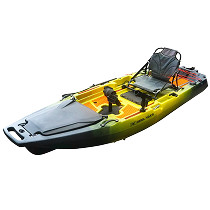
The kayak approach differs from powerboat tactics. You're not covering water quickly, which is fine because you shouldn't be. Pedal to a promising point, work it methodically from multiple angles, fish it vertically, then move to the next specific target. The modular advantage of something like a Reel Yaks Recon means you've transported a full-size kayak in your vehicle to access remote ramps where pressure is lighter—but you're not sacrificing stability or capacity when you get there.
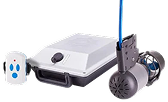
Electronics become more valuable in November than any other month. You're looking for suspended fish, subtle structure breaks, and bait concentrations. A quality fish finder shows you where fish are staged on that 28-foot channel ledge, eliminating unproductive water. The transducer-ready design on certain Reel Yaks models lets you mount electronics properly without DIY modifications.
Wind and Weather Windows
November weather is notoriously fickle—40 degrees and sunny one day, 28 degrees with sleet the next. This creates feeding windows that savvy anglers exploit. A warm, stable high-pressure day after several cold nights can produce excellent fishing as water temps stabilize and fish resume feeding. Conversely, a cold front dropping temps 15 degrees overnight usually shuts down the bite for 24-48 hours.
Pay attention to microclimates within your lake. A protected pocket on the north shore might be 2-3 degrees warmer than main lake due to sun exposure and wind protection. That doesn't sound like much, but it can be the difference between scattered fish and a concentrated group still feeding.
From a kayak fishing perspective, November wind matters more than in warmer months. You're often fishing deeper, more exposed water, and cold wind creates genuine safety concerns. A pedal drive gives you the hands-free control to manage wind drift while keeping your hands warm and ready to set hooks. The prop drive option, with instant reverse, helps with docking and positioning in current—useful when cold fingers make paddle strokes less precise.
The Mental Game of Slow-Bite Fishing
The hardest part of November fishing isn't technique—it's psychology. You'll make 100 casts to get 3 bites. You'll work perfect structure for an hour and catch nothing, then get one solid fish. You'll question whether fish are even present. This is normal. The anglers who succeed in cold water are those who trust the process, fish painfully slow, and maintain focus even when it feels unproductive.
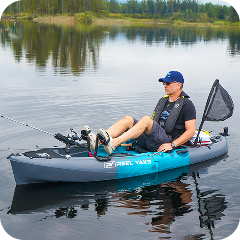
One verified Reel Yaks owner who fishes Lake Erie year-round puts it this way: "October me would laugh at November me. I'm making five casts where I used to make fifty. But November me catches the same number of fish—they're just bigger, and I work harder for each one."
That's the truth of coldwater fishing. Fewer bites, but often better quality. Bass that were scattered across flats all summer are now grouped on specific structure. You're not sorting through small fish—you're targeting the ones that have fed well all year and are still willing to eat as winter approaches.
Species-Specific November Strategies
Largemouth bass: Deep channel ledges, 20-35 feet, football jigs dragged painfully slow, or suspending jerkbaits with 20+ second pauses. Focus midday when sun warms shallow water slightly, triggering minor movements.
Smallmouth bass: Rocky breaks and chunk rock banks in 15-30 feet. Tube jigs, blade baits, or hair jigs worked slowly. Often more active than largemouth in cold water, particularly on sunny days.
Walleye: Deep edges of flats, channel breaks, 25-40 feet. Jigging spoons, blade baits, or jig-and-minnow combos bounced along bottom. Low-light periods often best, though deep-water fish feed midday.
Pike: Weed edges where green vegetation persists, adjacent to deep water. Large swimbaits, big spoons, or dead-sticked jerkbaits. Pike remain opportunistic—they'll hit lures other species ignore, but you need to put it right in front of them.
Adapting Your Kayak Setup for Cold Water
November fishing from a kayak requires some adjustments beyond technique. Layering becomes critical—you need warmth without bulk that restricts casting. Neoprene gloves or fingerless fishing gloves keep hands functional. A quality PFD designed for cold water isn't optional—cold-water immersion is life-threatening.
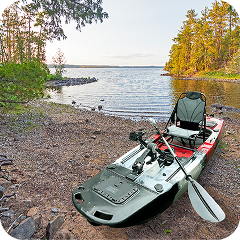
The advantage of a modular kayak system becomes apparent in November. You're making fewer trips as weather worsens, so the ability to load your kayak in a heated garage, transport it in your vehicle, and launch without dealing with roof racks in freezing wind is legitimately valuable. The three-section design means you're never wrestling a 12-foot rigid hull in icy parking lots.
Stability matters more in cold water because consequences are higher. A tippy kayak that was merely annoying in July becomes genuinely dangerous in 47-degree water. The 380-520 pound capacity across the Reel Yaks range means you're stable even loaded with cold-weather gear, extra layers, and safety equipment.
Why November Fishing is Worth the Effort
Despite the challenges—or perhaps because of them—November produces some of the year's most memorable catches. You're fishing with minimal pressure, as fair-weather anglers have put gear away. Fish are grouped predictably on specific structure types. And when you connect, it's often with larger-than-average specimens that have fed aggressively all year.
The slow bite isn't a reason to quit fishing—it's a reason to adapt. Slow down presentations to a crawl. Focus on high-percentage structure in the 20-35 foot range. Downsize speed but upsize profile. Fish midday sun when water temps peak. Trust that fish are present even when bites are infrequent. And enjoy the solitude of fishing when crowds have disappeared.
November separates casual anglers from dedicated ones. The cold water slow bite is real, predictable, and entirely manageable once you understand the biological drivers and adjust accordingly. Your kayak gives you access to pressure-free water, the stability to fish vertical presentations effectively, and the quiet approach that matters more as fish get spookier in clear water. The fish are still there—they're just waiting for an angler patient enough to fish at their pace rather than yours.
Fish More. Haul Less. No Roof Rack Required.
Reel Yaks modular pedal fishing kayaks break into 2–3 compact sections that fit in your car boot, store in your apartment, and assemble in 5 minutes — no roof rack, no garage, no heavy lifting. Browse all Reel Yaks modular fishing kayaks →