
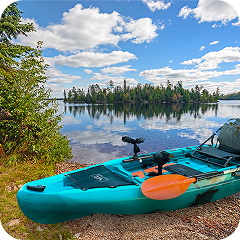

The sun drops below the treeline, carving long shadows across the water. Most anglers are loading their trucks, heading home for dinner. But you're just getting started. Halloween isn't just for trick-or-treaters—it's prime time for one of the most underutilized tactics in kayak fishing: the night bite.
Smallmouth bass turn aggressive after dark during fall, and the late October window around Halloween offers some of the year's best action. The water's cooled enough to concentrate baitfish, but it's not cold enough to shut down the bite. Add a full moon (or even better, a new moon), and you've got conditions that can produce doubles and triples when you're the only angler on the water.
Here's everything you need to know about night fishing from a kayak this Halloween season—from the gear that keeps you legal and visible to the presentation tactics that trigger strikes when smallmouth are prowling in total darkness.
Why Halloween Week Is Prime Time for Smallmouth
Late October smallmouth are in full feeding mode, packing on calories before winter's metabolic slowdown. The combination of shorter days, cooling water temps (usually 50-60°F in most smallmouth waters), and falling leaves that block surface light creates ideal conditions for nocturnal hunting.
Smallmouth rely heavily on their lateral line system to detect prey vibrations in low light. They're not spooked by boat traffic or shadows. And they push into surprisingly shallow water under cover of darkness, often staging in 3-6 feet where they'd never hold during daylight hours.
The Halloween full moon (when it aligns) provides just enough ambient light to silhouette baitfish from below, triggering aggressive strikes. New moon periods work equally well—smallmouth hunt by vibration and smell when visual cues disappear entirely.
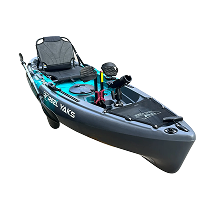
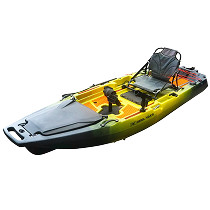
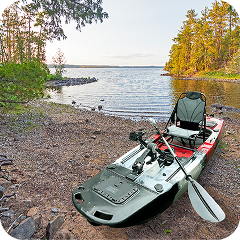
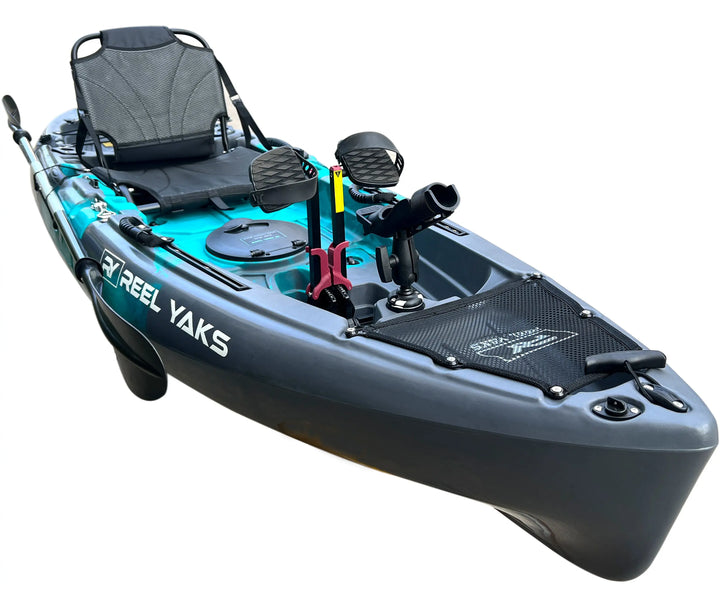
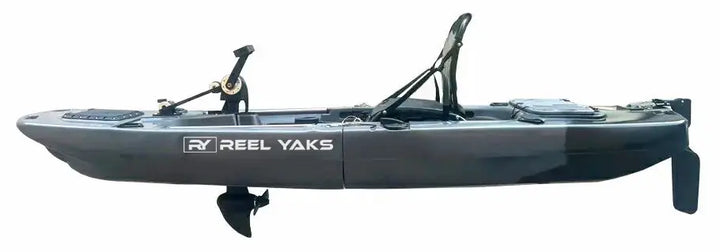
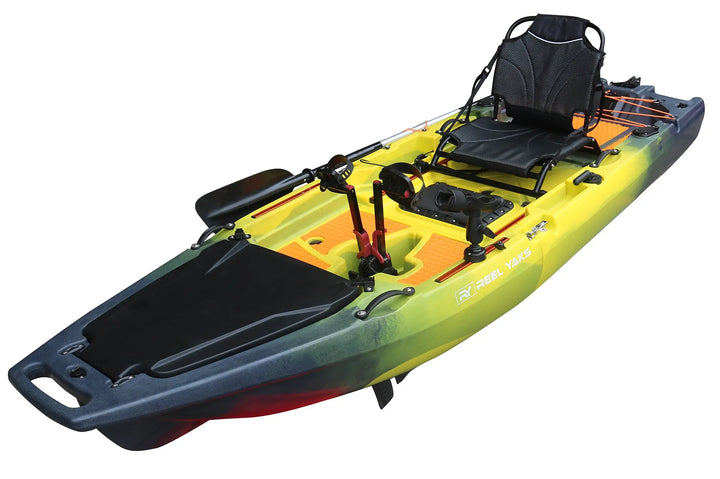
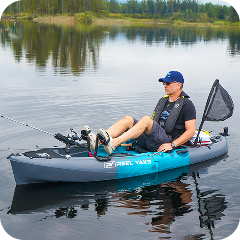
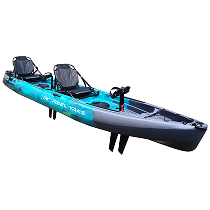
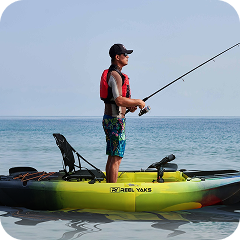
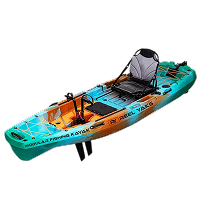
From a kayak, you've got stealth advantages that powerboats can't match. You're quieter, lower profile, and you can work skinny water without spooking fish. Models like the Reel Yaks Radar or Recon offer excellent stability for standing casts even in low light, and their modular design means you can transport your setup without the logistical headaches of strapping a 12-foot rigid hull to your roof in the dark.
Navigation Lights: Not Optional, Actually Required
Let's get the legal stuff out of the way first, because it matters. US Coast Guard regulations require all vessels—including kayaks—to display proper navigation lights between sunset and sunrise. This isn't a suggestion. It's federal law, enforced by state fish and game officers who absolutely patrol after dark.
You need a white light visible 360 degrees from two miles away. Most kayak anglers use a removable stern light that clips to a flag pole or rod holder. LED options run 20-30 hours on AA batteries and cost $15-30. Mount it high enough to clear your head and rods.
Some jurisdictions also require or strongly recommend a bow-mounted red/green combination light. Check your state's specific boating regulations—they're usually stricter than federal minimums.
Beyond legal compliance, navigation lights are your insurance policy. Powerboats running at night can't see a low-profile kayak until they're dangerously close. Your stern light makes you visible early enough for them to alter course. It's the difference between a peaceful evening and a hospital visit.
Headlamps, Red Mode, and Preserving Night Vision
A quality headlamp is your most important tool after navigation lights. But here's what most first-time night anglers get wrong: they blast white light constantly, destroying their night vision and spooking every fish within 50 feet.
Spring for a headlamp with red LED mode. Red light preserves your natural night vision (the rhodopsin in your retinal rods doesn't react to red wavelengths), lets you tie knots and change lures without blinding yourself, and doesn't penetrate water as aggressively as white light—meaning less spooking.
Use red mode for 95% of your tasks: rigging, checking maps, navigating. Reserve white light for emergencies, searching for dropped gear, or dealing with tangles you absolutely can't handle in red. Your eyes need about 20-30 minutes to fully adapt to darkness. One burst of white light resets that clock.
Recommended specs: at least 200 lumens on white, 50+ lumens on red, IPX4 water resistance minimum, and a comfortable head strap that won't slip when you're sweating. Rechargeable batteries are fine, but carry a spare set—there's no way to charge on the water if you run dry mid-session.
Lure Selection: Vibration and Contrast Win After Dark
Smallmouth can't see your lure's intricate paint job at night. They're hunting by vibration signature, water displacement, and silhouette contrast against ambient light. Your lure selection should reflect that reality.
Spinnerbaits are the night bite MVP. The thump from Colorado blades creates low-frequency vibration that smallmouth detect from 15+ feet away. Black or dark purple skirts offer maximum silhouette contrast. Throw a 3/8 oz spinner over shallow rock piles and let it helicopter down—strikes often come on the drop.
Chatterbaits (bladed jigs) produce even more vibration than spinnerbaits. The hunting action of the blade mimics fleeing baitfish. Black/blue or black/chartreuse combinations work well. Fish them with a steady retrieve just fast enough to keep the blade vibrating.
Suspending jerkbaits in black, purple, or dark shad patterns are deadly when smallmouth suspend over deeper water. Work them with long pauses—the silhouette hanging motionless triggers strikes from fish that follow but won't commit to a moving target.
Topwater still produces in early darkness. Black Jitterbugs or dark-colored prop baits create surface commotion that calls fish from below. The strikes are violent—be ready for a jumper that'll test your hookset in the dark.
One weird trick: add a small rattle to soft plastics. Push a glass rattle into the body cavity of a tube or swimbait. That subtle clicking brings curious smallmouth within strike range when they might otherwise miss your offering.
Reading Water You Can't See
Daytime structure scouting pays massive dividends at night. If you're fishing unfamiliar water after dark, you're asking for trouble—or at best, a lot of fruitless casting.
Scout your spots during daylight hours. Mark waypoints on your GPS or phone for productive areas: rock transitions, creek mouths, current breaks, shallow flats adjacent to deep water. Smallmouth don't relocate far at night—they just move shallower onto the structures they were using during the day.
Focus on 3-6 feet of water near deeper access. Smallmouth push onto flats to ambush baitfish, but they want quick escape routes to deeper water if they feel threatened. Points, inside turns, and the backs of creek arms are all high-percentage targets.
Current is your friend. Moving water concentrates baitfish and positions smallmouth in predictable feeding lanes. The current seam where faster flow meets slack water is a strike zone. Cast across the seam and let your lure swing through—strikes often come right where the flows meet.
Staying Safe When Things Get Spooky
Night fishing from a kayak is safe if you're prepared. It's dangerous if you're winging it.
Always wear your PFD, even in calm conditions. You can't see obstacles, waves, or other boats as easily at night. If you flip, that PFD is the difference between a scary story and a tragedy.
Tell someone your plan. Share your launch location, expected return time, and emergency contact. Set a phone alarm for your "check in by" time. If you're not back, they know to call.
Avoid alcohol entirely. Night navigation requires sharper judgment than daytime paddling. Depth perception is compromised, obstacles appear suddenly, and cold water hits harder if you go in. Save the celebratory beer for the boat ramp.
Check weather obsessively. Wind that's manageable during daylight becomes disorienting at night. You can't see waves building until they're on you. If sustained winds hit 10+ mph, seriously consider postponing.
The modular advantage of Reel Yaks models really shines here—if conditions deteriorate unexpectedly, you can disassemble at a closer takeout point rather than fighting back to your original launch. The 27-51 lb section weights mean you can portage to safety without calling for rescue.
The Midnight Hookset: Fighting Fish You Can't See
Setting the hook on a fish you never saw strike takes adjustment. There's no visual cue—just sudden weight or line movement.
Keep slight tension on your line at all times. Slack line masks bites. That gentle load lets you feel the difference between a strike and your lure ticking bottom.
When you feel the bite, pause for a half-second before setting the hook. Night smallmouth often strike short initially, then reposition for a full bite. That tiny delay increases hookup percentages dramatically.
Fight fish by feel, not sight. Keep your rod tip up, maintain pressure, and trust your drag setting. Use your headlamp on red mode to track line angle if you need to—but resist the urge to spotlight the fish. That often triggers a final surge that can throw the hook.
Have a net ready and positioned where you can grab it one-handed. Landing a thrashing smallmouth in darkness without a net is possible but way harder than it needs to be. Rubber nets are worth it—they're easier on fish and don't tangle treble hooks.
When to Pack It In
The best night bite windows are the first hour after sunset and the two hours before sunrise. Middle-of-the-night action slows, though full moons keep fish active longer.
If you're not getting bites after two hours, you're probably in the wrong spot or using the wrong presentation—not experiencing a "dead night." Move to shallower structure, switch to a vibration lure, or relocate to a current seam.
Know your limits. If you're cold, tired, or feeling uncomfortable, head in. Night fishing should be fun, not an endurance test. There's always tomorrow night.
This Halloween, skip the horror movies and experience the real thrill: a 4-pound smallmouth crushing a black spinnerbait in total darkness, your rod doubled over, adrenaline spiking as you fight a fish you can only feel. That's the kind of spooky you'll want to repeat all season long.
Fish More. Haul Less. No Roof Rack Required.
Reel Yaks modular pedal fishing kayaks break into 2–3 compact sections that fit in your car boot, store in your apartment, and assemble in 5 minutes — no roof rack, no garage, no heavy lifting. Browse all Reel Yaks modular fishing kayaks →