Most anglers reach for the same tired arsenal when late fall arrives—they're throwing Alabama rigs, dragging football jigs, and grinding deep-diving crankbaits while the guy in the modular kayak quietly loading his livewell is doing something different. The best late-fall lures aren't always the ones dominating tournament coverage or Instagram feeds.
When water temperatures slide into the 45-55°F range and baitfish schools tighten up, fish behavior shifts in ways that reward anglers who think beyond conventional wisdom. The metabolism slowdown is real, but it doesn't mean fish stop eating—it means they become more selective about energy expenditure versus caloric return. That's where these twelve underrated late fall lures come in.
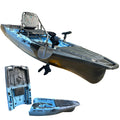
From a pedal kayak like the Recon 10ft with prop drive, you've got the maneuverability to work these baits in the precise zones where fall fish concentrate. The ability to hold position in current, back into pockets, or maintain exact trolling speeds without paddle fatigue gives you serious advantages with the finesse and positioning these lures demand.
1. Marabou Hair Jigs (1/8 to 3/8 oz)
While everyone's pitching bulky beaver-style jigs, hair jigs are catching smallmouth, spotted bass, and even largemouth that have seen every craw imitation in the lake. The flowing marabou creates lifelike movement on the fall that triggers strikes from lethargic fish.
The scenario: Rocky banks and chunk rock in 8-20 feet of water where fish are suspending just off bottom structure. Hair jigs shine when fish want a slower, more natural presentation than rubber-skirted jigs provide.
Brand pick: Woody's Wee Hair Jigs in white or chartreuse-white combinations. The custom-tied marabou breathes even on dead-still pauses. For walleye and smallmouth, go with the 1/4 oz size. Largemouth in stained water prefer the 3/8 oz in darker colors.
Kayak advantage: Hair jigs require slack-line bites and subtle takes—much easier to detect when you're using your Radar 10ft to drift slowly along contours rather than fighting wind and current from an anchored position.
2. Blade Baits (Heddon Sonar, Silver Buddy)
Blade baits are having a quiet renaissance among kayak anglers who fish current and main-lake points. These vibrating metal lures drop fast, kick hard on the lift, and flutter on the fall—perfect for covering vertical structure efficiently.
The scenario: Suspended fish over deep brush, channel edges, or anywhere baitfish are stacked in 15-35 feet of water. Blade baits excel when fish are relating to specific depth zones rather than bottom.
Brand pick: The original Heddon Sonar in 1/2 oz gold or chrome blue. The design is decades old because it works. Rip it three feet, let it helicopter down, and watch your electronics for the strike on the fall.
Kayak advantage: You can yo-yo blade baits vertically while holding over structure with pedal power—no trolling motor noise to spook fish in clear late-fall water. The prop drive on models like the Recon propeller drive lets you back away from a school without lifting your bait.
3. Lipless Crankbaits in Shad Patterns (Subtle Colors)
Everyone throws lipless cranks, but most throw them wrong in late fall. Forget the aggressive ripping retrieve—burn-and-kill cadences outfish steady retrieves when water temps drop.
The scenario: Grass flats in 4-8 feet, especially dying vegetation that still holds baitfish. Also effective slow-rolled along channel swings where shad concentrate.
Brand pick: Strike King Red Eye Shad in 1/2 oz, Sexy Shad or Blue Back Herring. The tungsten version sinks faster for quicker depth changes. Work it with long pauses—five to eight seconds of dead drift after each pull triggers reflex strikes.
Kayak advantage: The silent glide of a fin-drive kayak like the Raptor 9.5ft lets you approach shallow grass without spooking fish, critical when water clarity increases in fall.

4. Ned Rig with Goby-Style Heads
The standard mushroom-head Ned rig catches fish, but switching to a goby-imitating jighead in fall unlocks a different bite. Round gobies have become primary forage in many northern fisheries, and bass are keyed on them.
The scenario: Rock piles, riprap, and hard bottom in 6-18 feet where gobies are present. This works on any lake where gobies exist, but it's especially deadly on Great Lakes fisheries.
Brand pick: Z-Man Finesse ShroomZ jigheads in 1/5 oz paired with green pumpkin or PB&J colored ElaZtech finesse baits. The buoyant ElaZtech stands up off bottom like a feeding goby.
Kayak advantage: Ned rigs require precise casts to specific rocks and minimal line movement—something you can only achieve when you're not constantly adjusting for wind or repositioning with a paddle.
5. Long-Pause Jerkbaits (Not Just Suspending Models)
Jerkbaits get plenty of attention, but most anglers don't adapt their cadence enough for late fall. We're talking 20-30 second pauses between twitches when water temps hit the low 50s.
The scenario: Main-lake points, secondary points, and long tapering banks in 6-12 feet. Fish are following baitfish schools but won't chase aggressively—they'll ambush a vulnerable target.
Brand pick: Megabass Vision 110 in Ghost Wakasagi or French Pearl. Yes, it's expensive, but the weight transfer system and perfect suspending action at 48-54°F water temps justify the cost. For a budget option, the Lucky Craft Pointer 100 works nearly as well.
Kayak advantage: Long pauses mean your bait hangs in the strike zone while current or wind pushes your kayak—creating that dying baitfish drift that triggers bites. Pedal positioning keeps the bait in front of structure during the pause instead of drifting past it.
6. Underspin Jigs (Roadrunner-Style)
Underspin jigs—a leadhead with a spinner blade attached underneath—are criminally underused outside of crappie fishing. In late fall, they're phenomenal for triggering reaction strikes from bass and walleye.
The scenario: Anywhere you'd throw a swimbait but need more flash. Especially effective in stained water or low-light conditions when fish are using lateral lines more than vision.
Brand pick: Beetle Spin in 1/4 oz white or chartreuse. Thread on a 3-inch swimbait instead of the stock grub for better action and profile. The blade gives vibration that swimbaits alone can't match.
Kayak advantage: Slow-rolling these along contours at exactly 0.5-0.8 mph (which pedal kayaks handle perfectly) keeps the blade thumping without overworking the retrieve.
7. Tube Jigs in Natural Colors
Tubes dominated the 90s, faded from popularity, and quietly continue catching fish while everyone moved on to creature baits. In late fall, their compact profile and natural fall rate outfish bulkier options.
The scenario: Smallmouth on rocky main-lake structure, spotted bass in chunk rock, or largemouth around boat docks and wood. Anywhere fish want a crayfish profile without excessive bulk.
Brand pick: Strike King Coffee Tube in 4 inches rigged on a 3/8 oz tube jig. Smoke-colored tubes in clear water, green pumpkin in stained. The hollow body creates a defensive posture when fish grab it, leading to better hookups.
Kayak advantage: Tubes require a vertical presentation along breaklines—something you can maintain perfectly by pedaling parallel to structure while letting the tube pendulum-swing down the drop.
8. Jigging Spoons in Compact Sizes
Big flutter spoons get attention, but 2-3 inch jigging spoons in 3/8 to 5/8 oz are far more versatile in late fall. They sink fast, flutter tight, and imitate dying shad perfectly.
The scenario: Anywhere baitfish are schooled vertically—under docks, beside bridges, or suspended over deep points. Deadly when you mark fish holding at specific depths.
Brand pick: Hopkins Shorty in chrome or gold. The hammered finish reflects light erratically. Drop it on a slack line, watch your sonar, and set when the spoon stops falling.
Kayak advantage: Jigging spoons require you to stay directly overhead of fish—impossible from a drifting boat but simple when you're pedaling. Your electronics stay over the school while you work the column.
9. Shaky Head with Trick Worms
Shaky heads aren't underrated everywhere, but using them with straight-tail finesse worms instead of the usual Senkos catches different fish. The subtle wiggle appeals to pressured bass.
The scenario: Isolated cover in 8-20 feet—single laydowns, rock piles, or stumps where fish are holding tight to limited structure options.
Brand pick: Zoom Trick Worm in 6.5 inches (green pumpkin or plum) on a 3/16 oz VMC Shaky Head Jig. The light weight lets the worm undulate on the drop and shake with minimal rod movement.
Kayak advantage: Shaky heads fish best when you can hold position and shake in place for extended periods—something that burns your arms in a paddle kayak but happens effortlessly when you're pedaling to hold position.
10. Small Swimbaits (3.5-4 Inch) on Light Jigheads
While everyone's throwing 5-8 inch swimbaits, downsizing to 3.5-4 inch models on 1/8 to 1/4 oz heads catches more bites in late fall. The smaller profile matches juvenile shad, and the slower sink rate keeps it in the zone longer.
The scenario: Shallow cover transitions—where deep water comes close to shore, especially if there's timber or brush present. Also effective vertically along bluff walls.
Brand pick: Keitech Easy Shiner in 3.5 inches (sexy shad) on a Gamakatsu 1/8 oz weighted swimbait hook. The Keitech tail kicks at ultra-slow retrieves, perfect for cold-water fish.
Kayak advantage: A modular pedal kayak lets you maintain the painfully slow retrieve speeds (0.3-0.5 mph) these small swimbaits need while still making forward progress along a bank or channel.
11. Drop Shot with Nose-Hooked Flukes
Drop-shotting isn't underrated, but rigging flukes instead of finesse worms is. The horizontal presentation imitates a suspended baitfish better than vertical straight-tail worms.
The scenario: Suspended fish in open water, main-lake humps, or anywhere you mark fish holding 5-15 feet off bottom over deeper water.
Brand pick: Zoom Super Fluke Jr. in pearl white, nose-hooked on a size 1 drop-shot hook with an 18-inch leader to a 1/4 oz weight. Shake it in place and watch for bites on the fall.
Kayak advantage: Drop-shotting while drifting (controlled by pedal speed) covers water efficiently while keeping your bait in the strike zone—especially effective from a kayak with reverse like the prop-drive models that let you back up over fish you mark.
12. Inline Spinners in Silver/White
Inline spinners have been relegated to trout duty in most anglers' minds, but they're incredibly effective on bass and walleye when retrieved properly in fall. The constant vibration and flash appeal to fish feeding on shad.
The scenario: Current areas—creek mouths, river sections, dam tailwaters, or anywhere moving water concentrates baitfish and predators. Also underrated along windblown banks.
Brand pick: Mepps Aglia in size 3 or 4, silver blade with a white bucktail. Retrieve just fast enough to keep the blade turning—slower than you think. Add a trailer hook if you're getting short strikes.
Kayak advantage: Working spinners through current is far easier when you're pedaling to control speed rather than fighting current with a paddle. You can hold in seams and eddies while maintaining perfect retrieve speed.
Rigging for Late-Fall Success From Your Kayak
The common thread through these twelve late fall lures is precision—precision in retrieve speed, precision in positioning, and precision in presentation cadence. That's exactly what a modular pedal fishing kayak delivers.
Whether you're running a compact model like the Raptor 9.5ft on small lakes or covering big water with something like the Rapido 10.8ft, the hands-free pedaling system lets you focus on working these finesse presentations while your lower body handles boat control. That multitasking advantage is the difference between going through the motions and actually feeling the subtle tick of a hair jig or the weight change when a bass inhales a suspended jerkbait.
Stock your kayak's rod holders with these overlooked options, match them to the conditions you're facing, and you'll find that late-fall fishing isn't about grinding it out—it's about showing fish something different than the other boats on the water. Sometimes the best edge isn't a new technique or a secret spot. It's just using proven baits that everyone else forgot about.